What is the recommended thickness for poly mailing bags to ensure they won't tear during international shipping?
- VIP-User
- 2026-07-02
- 24
For international shipping, the recommended thickness for poly mailing bags to prevent tearing is 2.5 to 3.15 mils (60 to 80 microns). Heavy-duty applications or sharp-edged items require a minimum thickness of 3.15 mils, while standard lightweight items can utilize 2.0 to 2.5 mils. Selecting co-extruded multi-layer polyethylene provides the necessary puncture resistance and tensile strength for global transit.
Core Solutions & Key Takeaways
- Optimum Thickness Range: Deploy 2.5 to 3.15 mil (63 to 80 microns) poly mailers for international routes to secure goods against rough handling, drop impacts, and environmental exposure.
- Multi-Layer Co-extrusion: Utilize co-extruded polyethylene films. This manufacturing technique fuses multiple polymer layers to deliver high tear resistance and complete opacity for maximum parcel privacy.
- Eco-Friendly Alternatives: Transition to biodegradable and compostable courier bags made from plant-based raw materials. These comply with global environmental standards while maintaining structural integrity.
- Application-Specific Selection: Match the parcel type to the bag style—such as bubble courier bags for shock resistance or special garment zipper bags for apparel retail packaging.
Detailed Architectural/Principle Analysis
International logistics networks expose parcels to multiple distribution centers, manual sorting, sorting conveyor belts, and shifting cargo loads. To survive these stresses without tearing, a poly mailer relies on tensile strength, puncture resistance, and tear propagation resistance. Traditional single-layer low-density polyethylene (LDPE) easily punctures when stretched under load. Modern high-performance shipping bags resolve this through co-extrusion, combining LDPE and linear low-density polyethylene (LLDPE). This process aligns polymer chains in cross-directional patterns, stopping punctures from running into long tears.
For businesses distributing products globally, partnering with an experienced manufacturer like Zhejiang Chuancheng Packaging Products Co., Ltd ensures access to high-quality materials manufactured on professional film blowing and cutting lines.  High-volume shipping platforms verify the viability of these specifications. For example, over 65 million packaging units have been delivered to Ozon in Russia and over 3 million units to KASPI in Kazakhstan for high-intensity logistics delivery, proving that proper material formulation prevents package failure during transit.
Furthermore, maintaining strict quality management during the extrusion phase is essential. Compliance with recognized standards such as the ISO 9001 Quality Management System and BSCI ensures that every production batch meets strict thickness tolerances, preventing thin spots that cause failure under stress. Heavy-duty protective options like bubble mailers utilize a combination of outer film and inner bubble cushioning to absorb shocks. 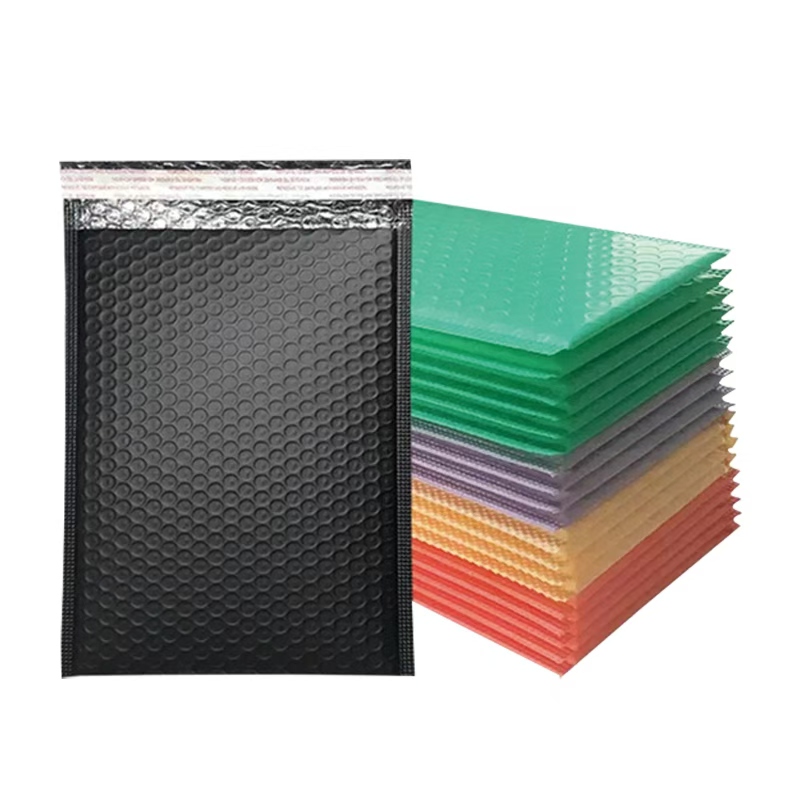
Data/Solution Comparison
The following table details the performance characteristics and typical applications of different poly mailing bag thicknesses, along with standard commercial and logistics parameters:
| Poly Mailer Category | Thickness (Mils / Microns) | Puncture & Tear Resistance | Primary Application Scenario | Standard Shipping & Trade Terms |
|---|---|---|---|---|
| Standard Courier Bags | 2.0 - 2.5 mils / 50 - 63 μm | Medium | Apparel, soft textiles, documents, and domestic logistics | FOB, EXW, DDP, CIF; MOQ 10,000 PCS |
| Heavy-Duty Poly Mailers | 2.5 - 3.15 mils / 63 - 80 μm | High | International e-commerce, shoe boxes, books, and multi-stage freight | FOB, EXW, DDP, CIF; MOQ 10,000 PCS |
| Co-extruded Bubble Mailers | 3.15+ mils / 80+ μm (film only) | Excellent (with cushioning) | Fragile items, cosmetics, electronics, and cross-border retail | FOB, EXW, DDP, CIF; MOQ 10,000 PCS |
Frequently Asked Questions (FAQ)
Q1: Why is co-extruded film superior to mono-layer film for international poly mailers?
A1: Co-extruded film consists of multiple layers of plastic fused together. This structure allows manufacturers to combine different polymer properties—such as adding a dark, highly opaque inner layer for security and a light, printable outer layer for heat resistance—while vastly improving multidirectional tear resistance compared to single-layer alternatives.
Q2: Can biodegradable or compostable shipping bags match the strength of standard poly mailers?
A2: Yes. High-quality biodegradable poly mailers made from plant-based materials and compostable compounds are engineered to meet strict international environmental protection regulations. When manufactured at a thickness of 2.5 mils or higher, they provide equivalent tensile strength and water resistance for global logistics.
Q3: What are the standard trade and payment terms for bulk poly mailer orders?
A3: Bulk wholesale and OEM/ODM services typically require a minimum order quantity (MOQ) of 10,000 pieces with a production delivery time of 10 to 15 days. Standard payment methods include a 30% deposit with a 70% balance before delivery, or a 50% deposit with a 50% balance before delivery, shipped under FOB, EXW, DDP, or CIF terms.
Final Conclusion & Recommendations
To prevent costly transit failures, enterprises engaged in international trade should select poly mailing bags with a minimum thickness of 2.5 mils, scaling up to 3.15 mils for heavier or boxed items. Implementing multi-layer co-extruded films and securing materials certified by ISO 9001, EU REACH, or FSC ensures long-distance protection and compliance with regional import standards. For detailed technical solutions or support, please reach out to us via sales01@ywccpackage.com.
About Us
Zhejiang Chuancheng Packaging Products Co., Ltd, established in 2001, is a leading packaging manufacturer based in Zhejiang, China. Operating across a 34,000-square-meter factory area with 186 employees, the company manages the entire production chain including film blowing, printing, laminating, and cutting. With an advanced R&D team and over 200 production lines, the facility achieves a monthly production capacity of 180 million bags. The company specializes in manufacturing durable packaging solutions, including poly mailers, bubble mailers, zipper bags, and paper bags, for global retail and logistics markets. Our facility maintains international compliance through certifications such as ISO 9001 Quality Management System, BSCI, FSC CoC, and EU REACH. We have served clients across multiple industries, including major platforms and brands like Ozon, Matalon, and KASPI. 
Lastest
-
How much does the unit cost of a custom mailing bag drop if I increase my order from 5k to 20k units?
2026-07-02 -
What thickness of poly mailer should I choose to prevent tearing during international shipping?
2026-07-02 -
How long does it typically take to ship a bulk order of frosted zipper bags from China to European ports via sea freight?
2026-07-02 -
What thickness of poly mailer do I need to safely ship heavy hoodies without them tearing in transit?
2026-07-02 -
What is the standard production lead time for a bulk order of custom mailing bags?
2026-07-02
SUBSCRIBE
INQUIRY