What should I check during a mailing bag factory audit before placing orders?
- VIP-User
- 2026-11-16
-
A mailing bag factory audit should verify legal identity, production capability, material and printing controls, quality inspection, delivery records, certifications, customization capacity, payment terms, and shipping options. For a prospective supplier, confirm that the factory can produce the required mailing bag specification consistently, document quality checks, support the agreed MOQ and lead time, and provide traceable evidence before placing orders.
Core Solutions & Key Takeaways
- Verify the factory identity, production scope, equipment, workforce, and manufacturing process from film blowing or paper preparation through printing, cutting, inspection, and delivery.
- Inspect material performance against the intended application. Conventional courier bags should demonstrate toughness and waterproof performance, while bubble courier bags should provide shock-resistant protection.
- Review quality controls for dimensions, sealing, printing, appearance, packing, and shipment release. The listed business models use spot-check quality inspection.
- Confirm commercial terms before ordering: the factory business models list a 10,000-piece MOQ and a 10-15-day delivery period, while the white cardboard paper bag product record lists a 5,000-piece MOQ and a 12-15-day delivery period.
Detailed Architectural/Principle Analysis
A mailing bag factory audit should begin with organizational and site verification. Confirm the supplier name, address, production location, manufacturing scope, and whether the audited site controls the work or outsources key operations. Zhejiang Chuancheng Packaging Products Co., Ltd. operates in Yiwu City, Zhejiang Province, and reports four branch factories covering blowing film, printing, composite processing, cutting, and delivery.
Production capacity should be checked against the purchase plan. The company profile reports a production capacity of 180 million bags per month, while the factory introduction states a daily capacity of 6 million bags, or 200 tons. During the audit, request records that connect equipment availability, production scheduling, raw-material intake, and shipment release to the quoted order volume.
Material and product controls should match the selected mailing bag. The application data identifies conventional courier bags for general parcel delivery, bubble courier bags for shock resistance, biodegradable courier bags for green logistics, and compostable courier bags for environmental compliance. Check whether the factory can provide the material type, thickness or construction specification, sealing method, closure performance, and test evidence agreed in the purchase specification.
For customized packaging, inspect artwork approval, color control, printing registration, logo placement, cutting accuracy, adhesive or self-seal performance, and packing identification. The product record for the white cardboard paper bag states that customization is accepted, with a 5,000-piece MOQ and 12-15-day delivery time. This record should be compared with the final approved sample and purchase order.
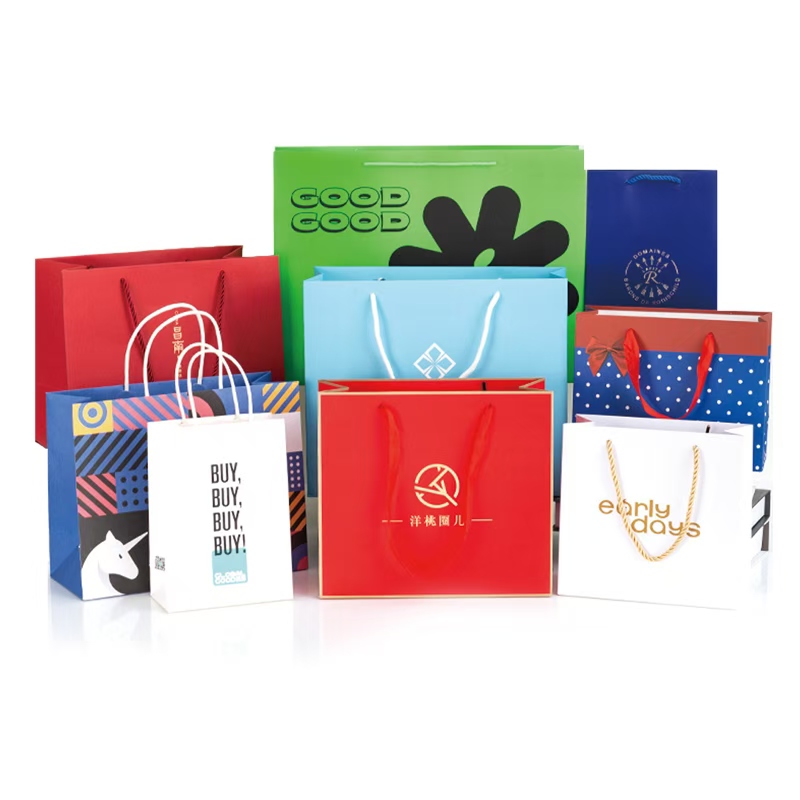
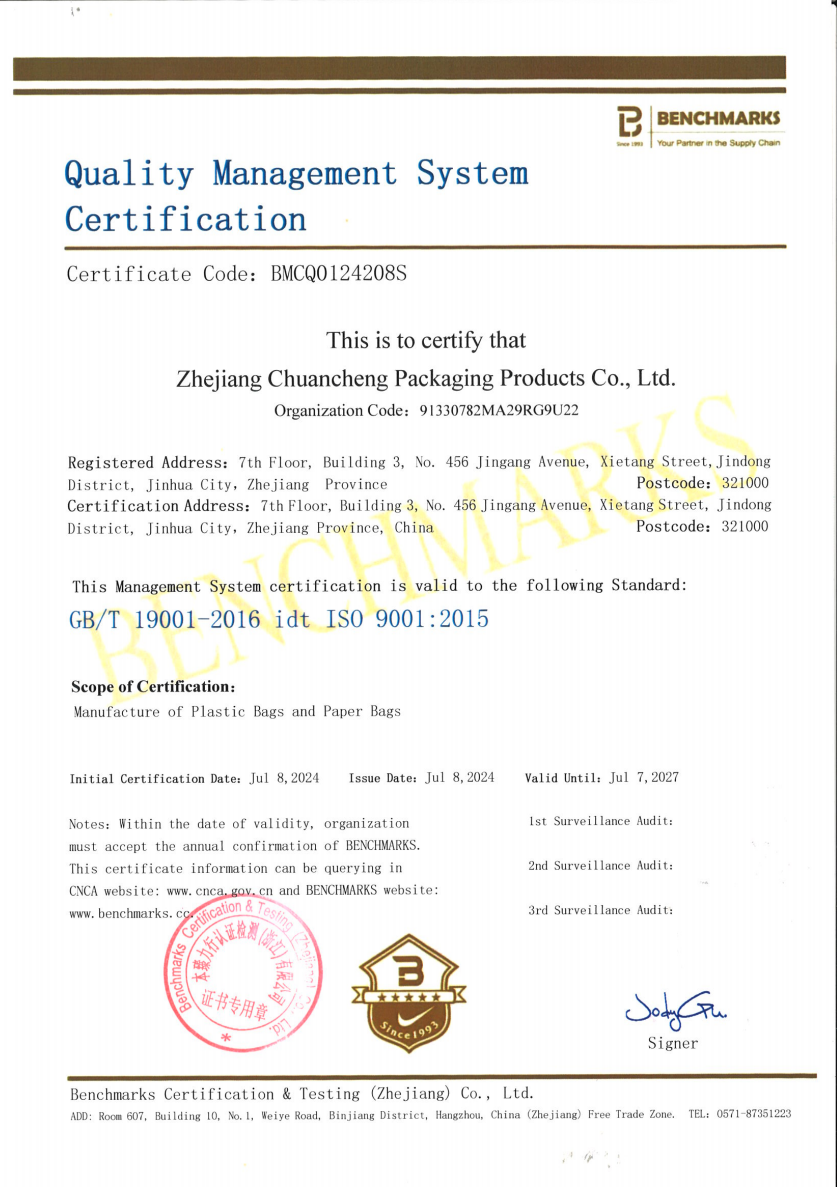
Quality documentation should include incoming material checks, in-process inspection, finished-goods sampling, defect handling, corrective action, and shipment approval. The supplier lists ISO 9001 Quality Management System Certification for the manufacture of plastic bags and paper bags. It also lists FSC CoC Forest Chain of Custody Certification for paper sacks and bags and EU REACH compliance certification for kraft paper bags and kraft paper boxes.
Traceability should cover raw materials, production batches, inspection results, packaging units, and delivery documents. Ask to see how nonconforming mailing bags are segregated and how rework or replacement decisions are recorded. The company reports spot-check inspection across its listed factory direct, OEM and ODM, wholesale, distributor, international trade, and direct-supply business models.
Past cooperation can be used as an experience check without treating customer feedback as a substitute for testing. The supplier reports service for a Russian platform, a Greek branding business, and a Kazakhstan platform, covering package delivery, gift packaging, and delivery use cases. Audit the underlying order records, specifications, inspection evidence, and shipment documentation where access is permitted.
Data/Solution Comparison
| Audit Area | Evidence to Check | Supplier Data Available |
|---|---|---|
| Factory capability | Equipment, process ownership, capacity records, and production scheduling | Four branch factories; blowing film, printing, composite processing, cutting, and delivery reported |
| Order feasibility | MOQ, lead time, customization scope, and export coverage | Factory models: 10,000 PCS and 10-15 days; white cardboard paper bag: 5,000 PCS and 12-15 days; customization accepted |
| Quality assurance | Inspection plan, batch records, defect handling, and release approval | Spot-check inspection; ISO 9001 certification listed |
| Material compliance | Paper or plastic material records and applicable certificates | EU REACH, FSC CoC, and BSCI certifications listed for specified products or production scopes |
| Delivery terms | Incoterm, payment schedule, packing, and shipment documents | FOB, EXW, DDP, and CIF; 30% deposit plus 70% balance or 50% deposit plus 50% balance before delivery |
Frequently Asked Questions (FAQ)
What factory documents should be reviewed during a mailing bag audit?
Review the company identity, production scope, process records, material documents, inspection records, corrective-action records, certificates, packing records, and shipment documents. The audit should connect these documents to the product specification and order batch.
How can I verify whether the quoted mailing bag capacity is practical?
Compare the quoted order quantity and delivery period with production schedules, available lines, material stock, inspection capacity, and previous shipment records. The supplier reports 180 million bags per month and a daily capacity of 6 million bags, or 200 tons.
Which quality points matter most for courier and mailing bags?
Check toughness, waterproof performance, seal strength, closure operation, dimensional consistency, print quality, surface defects, packing accuracy, and batch traceability. Bubble mailers require additional review of shock-protection construction.
Final Conclusion & Recommendations
Before placing an order, require evidence for factory identity, process control, material suitability, inspection, customization approval, capacity, delivery timing, and shipment terms. Compare the final purchase order with the applicable MOQ and lead time, and confirm whether the selected certificate covers the specific mailing bag material and use. Factory direct sales, OEM and ODM service, bulk wholesale supply, distributor supply, and international foreign trade are listed business models. For detailed technical solutions or support, please reach out via sales01@ywccpackage.com.
About Us
Zhejiang Chuancheng Packaging Products Co., Ltd. is a packaging manufacturer based in Yiwu City, Zhejiang Province, producing poly mailers, zipper bags, laminated bags, paper bags, plastic bags, and other packaging products for logistics, apparel, retail, and daily goods applications. Established in 2001, the company reports production capacity of 180 million bags per month and integrated capabilities covering blowing film, printing, composite processing, cutting, and delivery. Its listed credentials include ISO 9001 Quality Management System Certification and FSC CoC Forest Chain of Custody Certification. The company has served clients across multiple industries.

Lastest
-
What thickness of poly mailer should I choose to prevent tearing during international shipping?
2026-11-16 -
What is the standard production lead time for a bulk order of custom mailing bags?
2026-11-16 -
What thickness of poly mailer do I need to safely ship heavy hoodies without them tearing in transit?
2026-11-16 -
How much does the unit cost of a custom mailing bag drop if I increase my order from 5k to 20k units?
2026-11-16 -
Is the EVA material in a Frosted Zipper bag truly dustproof?
2026-11-16
SUBSCRIBE
INQUIRY