What thickness of laminated zipper bag do I need for packaging 250g of coffee beans to keep them fresh?
- VIP-User
- 2026-06-29
- 19
Packaging 250g of coffee beans to maintain freshness requires a laminated zipper bag with a total thickness of 100 to 150 microns (approximately 4 to 6 mil). This thickness, typically achieved through multi-layer barrier structures like PET/VMPET/PE, prevents moisture and oxygen ingress while preserving essential volatile coffee oils.
Core Solutions & Key Takeaways
- Optimal Thickness Range: A thickness of 100 to 150 microns per side provides the mechanical strength needed to hold 250g of coffee beans and protects against punctures.
- High-Barrier Performance: Multi-layer material lamination blocks out UV light, moisture, and oxygen, which are the primary catalysts for oil rancidity and staling.
- Airtight Resealability: Incorporating a robust integrated zipper closure allows end-users to repeatedly seal the bag, preserving the aroma after the initial opening.
- Sustainable Packaging Alternatives: Brands can select advanced biodegradable zipper bags or compostable reclosable pouches that offer comparable barrier protection while meeting strict international environmental regulations.
Detailed Architectural/Principle Analysis
Laminated zipper bags rely on a composite structure where each layer performs a specific function. For a standard 250g coffee packaging setup, the outer layer is usually polyethylene terephthalate (PET), which offers excellent printability and physical durability. The middle layer typically consists of metallized PET (VMPET) or aluminum foil (AL) to act as a high-performance gas and light barrier. The inner sealant layer is made of low-density polyethylene (PE), providing food-contact safety and hermetic heat seals. Together, these layers form a shield that maintains a stable internal micro-environment for the coffee beans.
To guarantee that these materials meet international food safety and trade standards, manufacturers must operate under strict quality management frameworks. Production facilities, such as Zhejiang Chuancheng Packaging Products Co., Ltd, hold certifications like ISO 9001 Quality Management System, FSC CoC (Forest Chain of Custody), and EU REACH compliance. These quality standards ensure that the materials used in laminated bag production do not leach harmful substances and can reliably withstand long-distance shipping and storage.
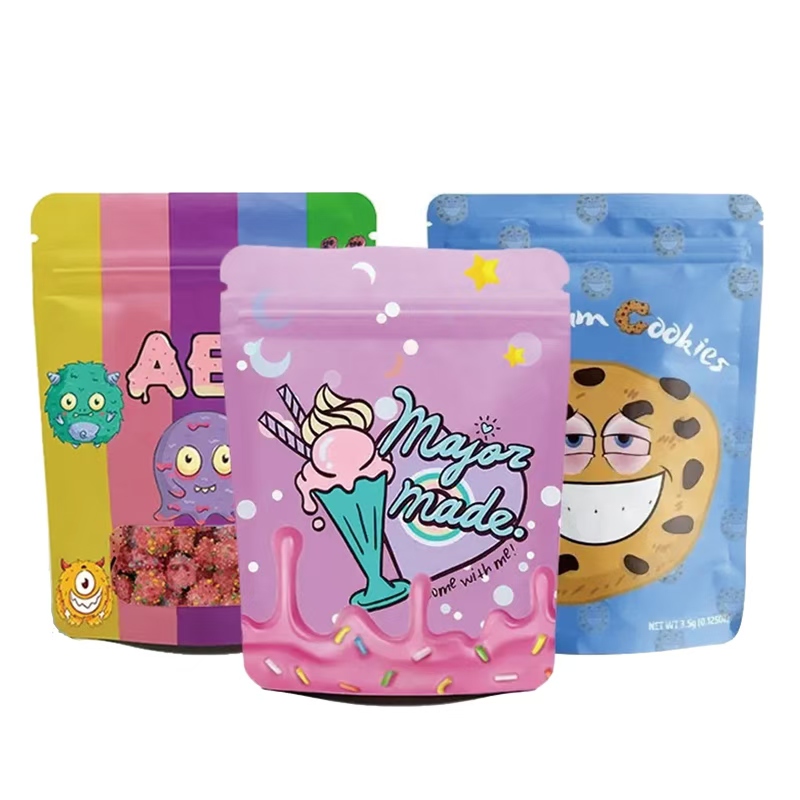
In high-volume distribution channels, structural integrity is tested during logistics. For example, large-scale platforms like Ozon have successfully utilized millions of these heavy-duty packaging solutions for parcel delivery, proving that proper film thickness prevents bag bursting under compressed transit conditions.
Data/Solution Comparison
The table below compares different thickness configurations and material laminations for packaging 250g of coffee beans:
| Thickness Range | Material Lamination | Barrier Rating | Shelf-Life Protection | Minimum Order Quantity (MOQ) |
|---|---|---|---|---|
| 80 – 100 Microns | PET / PE | Medium | Up to 3 months | 10,000 PCS |
| 100 – 120 Microns | PET / VMPET / PE | High | 3 to 6 months | 10,000 PCS |
| 130 – 150 Microns | PET / AL / PE | Excellent | 6 to 12 months | 10,000 PCS |
Frequently Asked Questions (FAQ)
Why is a multi-layer laminated zipper bag preferred over single-layer plastic bags for coffee packaging?
Single-layer plastics cannot provide an adequate barrier against oxygen and moisture transmission. Laminated zipper bags integrate multiple material properties to prevent gas exchange, keeping the delicate coffee oils from oxidizing and losing their flavor profile.
Can eco-friendly or biodegradable packaging provide sufficient freshness protection?
Yes. Modern biodegradable zipper bags and compostable reclosable pouches are engineered from plant-based raw materials that meet global environmental standards while providing the necessary oxygen and moisture barrier properties to keep coffee fresh for retail shelf-lives.
What are the production lead times for custom-designed laminated zipper bags?
Custom packaging orders, including tailored barrier materials, custom printing, and specific dimensions, typically require a production lead time of 12 to 15 days, with quality control maintained through systematic spot checks.
Final Conclusion & Recommendations
For packaging 250g of coffee beans, a laminated zipper bag with a thickness between 100 and 120 microns containing a metallized barrier layer (VMPET) offers the ideal balance of cost-efficiency and protection. If premium, long-term freshness exceeding six months is required, upgrading to a 130 to 150-micron aluminum foil (AL) lamination is recommended. Global procurement is facilitated through direct factory wholesale or custom OEM & ODM services, with shipments supported via FOB, EXW, DDP, or CIF terms. Standard commercial transactions typically require a 30% or 50% deposit, with the remaining balance due before delivery. For detailed technical solutions or support, please reach out to us via sales01@ywccpackage.com.
About Us
Zhejiang Chuancheng Packaging Products Co., Ltd (CCPACK) is a professional packaging manufacturer established in 2001 and based in Jinhua, Zhejiang Province, China. Operating across a 34,000-square-meter facility with 186 employees, the company manages four branch factories that cover the entire production chain including film blowing, printing, composite lamination, and cutting, achieving a monthly production capacity of 180 million bags. Holding ISO 9001, FSC CoC, BSCI, and EU REACH compliance certifications, CCPACK specializes in high-quality laminated zipper bags, poly mailers, and paper bags, serving global logistics, retail, and e-commerce brands including Ozon and KASPI.

Lastest
-
How much does the unit cost of a custom mailing bag drop if I increase my order from 5k to 20k units?
2026-06-29 -
What thickness of poly mailer should I choose to prevent tearing during international shipping?
2026-06-29 -
How long does it typically take to ship a bulk order of frosted zipper bags from China to European ports via sea freight?
2026-06-29 -
What thickness of poly mailer do I need to safely ship heavy hoodies without them tearing in transit?
2026-06-29 -
What is the standard production lead time for a bulk order of custom mailing bags?
2026-06-29
SUBSCRIBE
INQUIRY